New material and technological aspects of ancient red-figure pottery from southern Italy
S. Švarcová1, V. Šupita1,2, P. Bezdička1, M. Verčík3, D. Zákutná2,4
1ALMA Laboratory, Institute of Inorganic Chemistry of the Czech Academy of Sciences, Husinec 1001, 250 68 Husinec-Řež, Czech Republic
2Departement of Inorganic Chemistry, Faculty of Science, Charles University, Hlavova 8, 128 00 Praha 2, Czech Republic
3Institute of Classical Archaeology, Faculty of Arts, Charles University, Nám. Jana Palacha 2
116 38 Praha 1, Czech Republic
4Institut Laue-Langevin – The European Neutron Source, Grenoble, France
svarcova@iic.cas.cz
Red-figure is one of the main types of pottery decoration used by ancient Greeks introduced in ancient Athens around 530 BCE. In this technique, the background is painted black while the figures and other depicted objects or ornaments use the natural coloure of the clay. The distinctive colour of the black gloss was achieved through the presence of magnetite (Fe₃O₄), while the lustrous appearance resulted from a partially vitrified clay-based matrix. The black slip stands in sharp contrast to the light clay body, whose colour ranges from yellow to red depending on the iron content in the form of hematite (Fe₂O₃). The highest quality pottery was produced in Athens, where the local clay is naturally rich in iron, resulting in a deep black slip and an intense red clay body. In the 5th century BCE, red-figure pottery was exported to other parts of the Greek world, such as southern Italy where local production centres arose. The transmission of both the red-figure and black gloss techniques still raises many questions regarding the origin and training of the first artisans, their adaptation to local resources, and the interaction between newly introduced and Indigenous techniques. [1]
To understand painting technique and identify possible divergence from the original Attic production, eleven red-figure objects from the collection of the Faculty of Arts, Charles University in Prague, dated to the second half of the 4th century and produced in Apulian, Campanian and Lucanian workshops, were studied non-invasively using hand-held X-ray fluorescence (XRF), X-ray powder diffraction (XRPD), infrared (FTIR) and Raman spectroscopy and optical microscopy (OM) (Fig. 1, 2). In addition, scanning electron microscopy with energy dispersive spectroscopy (SEM/EDS) and small angle neutron scattering (SANS) were used for investigation of fragmentary pieces.
The comprehensive study of these ancient vases demonstrates that the black gloss technology diverges in certain aspects from the traditional procedures used in mainland Greece. The most striking differences were the presence of low-temperature phases, such as clay minerals, gypsum, and calcium oxalates in the form of whewellite or weddellite. Oxalates and gypsum in the black gloss and clay body were interpreted as secondary (degradation) products resulting from microbial activity and sulphate-rich environment usual for funeral sites near gypsum-bearing rock formations. On the other hand, the clay minerals, part of the original material, are present in different forms: in the black gloss in a dehydroxylated state, and the clay body with structurally bound hydroxyl groups. This finding implies that the clay body was fired under milder conditions than the black gloss, or that the firing duration was too short to fully heat the thick clay body, resulting in the retention of the clay minerals in this form.
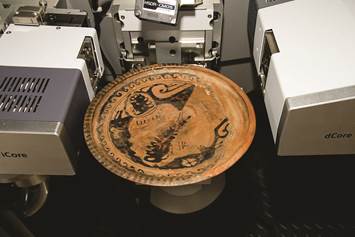
Figure 1. The XRPD analysis of Plate 26.3 (4th century BCE, Apulia, South Italy). Photo P. Bezdička.
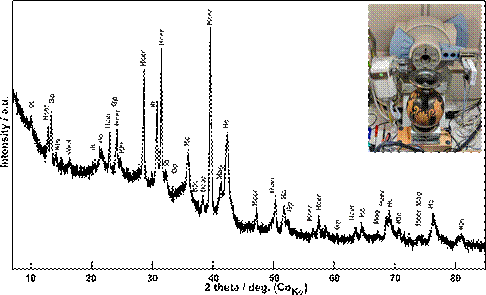
Figure 2. The XRPD pattern collected on black gloss of the vase Peliké 27.3 (4th century BCE, Apulia, South Italy). Identified phases: Gp – gypsum (CaSO4·2H2O, PDF 00-033-0311), Hcer – hydrocerussite (Pb3(CO3)2(OH)2, PDF 04-016-7055), Hc – hercynite (FeIIAl2O4, PDF 00-034-0192), Ilt – Illite (K0.65Al2[Al0.65Si3.35O10](OH)2, PDF 04-016-2975), Kln – kaolinite (Al2Si2O5(OH)8, PDF 1-080-0885), Mag – magnetite (FeIIFeIII2O4, PDF 00-019-0629), Wed – weddellite (Ca(C2O4)·(2.5-x)H2O, PDF 00-017-0541). Photo P. Bezdička.
Another striking difference is the absence of magnetite in the black gloss of some vases, where it is replaced either by hercynite or other spinel phases (typically found alongside magnetite), or by carbon black. The presence of spinel phases generally contrasts with the mild firing temperatures indicated by the presence of clay minerals. This suggests a new technique for producing spinel-based black slip, in which the spinel phases were prepared in advance and mixed with a clay-based filler material. This slip was applied to the vase, and the entire piece was fired under mild conditions. The firing process may also have been significantly shorter. This new technique indicates a tendency toward more economical production of red-figure pottery. The separately manufactured spinel-based material (or even its complete substitution by carbon black) could be produced in larger quantities and extended with filler material. Firing the entire painted piece quickly, low-temperature would also have been inexpensive compared to the traditional three-phase firing cycle. [2]
1. A. D. Trendall, Red Figure Vases of South Italy and Sicily: Handbook, London. 1989, pp. 288.
2. V. Šupita, Identification of Pigments on Cultural Heritage Objects. Bachelor’s thesis, Faculty of Science, Charles University. Prague. 2025.
The study was funded by the Czech Academy of Sciences Strategy AV21 scheme as part of „The power of objects: Materiality between past and future“ grant at the Institute of Inorganic Chemistry of the Czech Academy of Sciences.